


Geopolitics gave crypto traders whiplash on Monday. Bitcoin surged nearly 6% in a matter of hours on hopes that US-Iran tensions were cooling, only for the foundational claim behind that rally to get publicly disputed by Iran itself.
The result is a market trading near session highs on a narrative that may or may not be real. Which, if we’re being honest, is kind of crypto’s whole thing.
The rally, the claim, and the denial
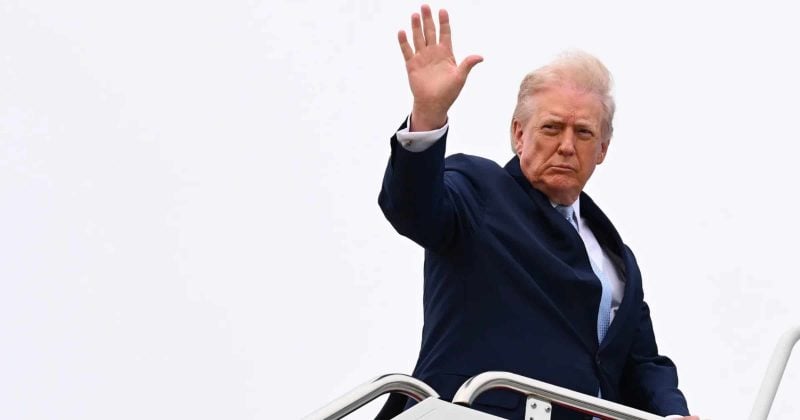
Here’s the sequence. President Trump posted that the US and Iran had held “very good and productive conversations.” Markets — crypto included — took that as a de-escalation signal and ran with it.
Bitcoin jumped from an early Monday low near $67K to above $71K within hours. Ethereum climbed back above $2,150. Solana pushed toward $91. XRP touched $1.45.
Across the board, risk assets caught a bid. The logic was straightforward: reduced geopolitical tension means less reason to hide in cash, more appetite for speculative assets.
Then Iran’s Fars news agency reported that the cited talks never actually happened. In English: the catalyst for the entire rally was contradicted by the other party supposedly involved in it.
Bitcoin didn’t crater on the denial, though. As of Monday evening, BTC was still trading near $71K, holding most of its gains. That’s either a sign of genuine underlying demand or a market that decided it liked the price move too much to give it back.
The 24-hour numbers tell the story. Bitcoin was up 2.8%, Ethereum gained 3.7%, and Solana led major caps with a 4% move higher. Not bad for a Monday built on disputed diplomacy.
Extreme fear meets institutional conviction
Here’s the thing about this rally: it happened against a backdrop of genuinely terrible sentiment. The Crypto Fear & Greed Index sits at 8 — deep in “Extreme Fear” territory. Last week it was 23, which was also extreme fear. So we’ve gone from scared to terrified.
For context, the Fear & Greed Index runs from 0 to 100. A reading of 8 means almost everyone is bearish. The last time sentiment was this low for this long, it coincided with major market bottoms in previous cycles. That’s not a prediction — it’s a pattern worth noting.
Despite the seven-day picture still being red — Bitcoin is down 3.7% over the past week — the snapback on Monday suggests there’s a floor of buyers waiting to step in on any whiff of good news. Real or imagined.
One entity that clearly isn’t waiting for sentiment to improve: MicroStrategy. Michael Saylor’s firm scooped up another 1,031 BTC for roughly $77M on the same day. That works out to about $74,700 per coin, give or take.
MicroStrategy has become something of a sentiment indicator in its own right. When the company buys during periods of extreme fear, it signals institutional conviction that the current price is a bargain relative to their long-term thesis. Whether you agree with that thesis is a separate question, but it’s hard to dismiss a company that keeps putting tens of millions on the line.
What this means for investors
The conflicting Iran reports create a genuinely tricky setup. If the talks were real and progress continues, the de-escalation trade has legs. Risk assets — crypto especially — could build on Monday’s gains as geopolitical risk premiums come down.
If the talks weren’t real, the market is sitting on gains built atop a sandcastle. The question then becomes whether buyers who entered above $70K have the conviction to hold, or whether they’ll bail at the first sign of renewed tension.
Look, there’s a third possibility too. Maybe partial talks happened, maybe backchannel communications occurred, and both sides are managing the narrative for domestic audiences. Diplomacy is rarely as binary as “happened” or “didn’t happen.” Markets may be pricing in the ambiguity itself — the idea that some form of engagement is occurring, even if the details are disputed.
The broader context matters here. Bitcoin has been caught between macro crosscurrents for weeks now. On one side, institutional adoption continues — spot Bitcoin ETFs, MicroStrategy purchases, corporate treasury moves. On the other, geopolitical uncertainty and persistent rate expectations have kept a lid on sustained rallies.
That tension is visible in the data. A Fear & Greed reading of 8 alongside a price above $70K is unusual. It suggests positioning is light and skepticism is high, but the price itself hasn’t broken down. That’s the kind of setup that can resolve violently in either direction.
One corner of the market that isn’t waiting for resolution: meme coins on BNB Chain. The Four.meme ecosystem surged 175.6% over seven days, a reminder that speculative appetite hasn’t disappeared — it’s just migrated to smaller, higher-volatility corners of the market.
For anyone watching the geopolitical angle, the next 48 hours are what matter. If additional details emerge confirming some form of US-Iran engagement, expect Bitcoin to test the $72K-$73K range. If the denial holds and tensions re-escalate, that $67K Monday low becomes the level to watch on the downside.
Bottom line
Monday’s rally was built on a geopolitical headline that got disputed within hours — and the market mostly shrugged off the contradiction. That tells you something about where sentiment stands. When a market rallies on disputed good news and refuses to sell the denial, it’s either resilient or in denial itself. The Fear & Greed Index at 8 suggests everyone expects the worst, which historically is exactly when markets stop delivering it. Whether that pattern holds depends less on crypto fundamentals and more on whether anyone in Washington or Tehran picks up the phone for real.