


The US supercore CPI, which strips out food, energy, and shelter to isolate the stickiest parts of inflation, climbed to 3.5% year over year in April 2026, up from 3.4% in March. The month-over-month reading came in at 0.5%.
What supercore CPI actually measures and why it matters
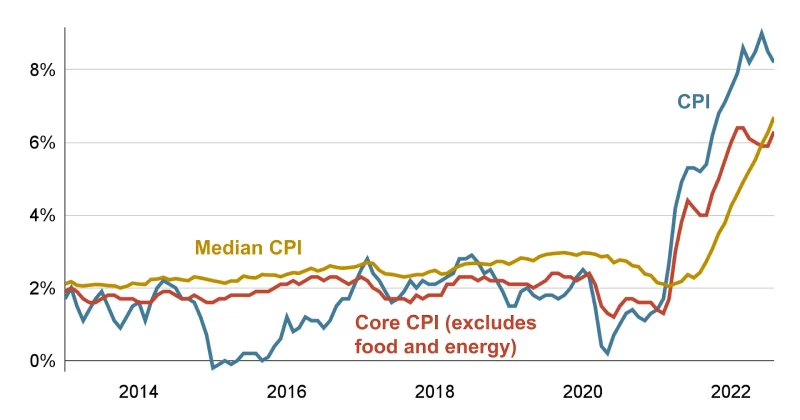
The consumer price index has a lot of flavors. There’s headline CPI, which includes everything. There’s core CPI, which strips out food and energy. And then there’s supercore, which goes a step further by also removing shelter costs.
Why bother? Because shelter inflation is notoriously laggy. It takes months for changes in the housing market to filter into the data. The Fed has repeatedly pointed to supercore as the metric that best captures underlying price pressures in the services economy.
The broader inflation picture isn’t helping
Headline CPI surged to 3.8% year over year in April, up from 3.3% in March, marking the highest level since May 2024 and exceeding forecasts. Core CPI came in at 2.8% year over year, also above expectations. Energy prices rose 17.9% year over year, with gasoline surging 28.4%, driven by disruptions linked to the Iran conflict.
Core services inflation reached 3.3% year over year in April. These are sectors where wages represent a large share of costs, which means inflation there tends to be self-reinforcing. Core goods, by contrast, eased to just 1.1%, providing some offset, though the services economy dwarfs goods in terms of its share of consumer spending.
What this means for crypto and risk assets
Higher supercore readings give the Fed cover to keep rates elevated for longer. Every month this number stays above 3%, the probability of near-term rate cuts shrinks. Expert analysis indicates that the higher supercore CPI signals a delay in Federal Reserve rate cuts, putting pressure on risk assets such as digital currencies.
When you can earn north of 5% in a money market fund, speculative assets need to work harder to justify capital allocation. Altcoins and DeFi tokens are typically even more sensitive to liquidity conditions, as smaller-cap assets thrive when capital is cheap and abundant.